Deadwooding Honolulu, HI - Remove the Risk Before It Falls

Deadwooding Honolulu, HI — Remove the Risk Before It Falls

Dead branches do not announce themselves before they drop. On Oahu — where trade winds, rain, and year-round growth accelerate decay — a dead limb over a roof or driveway is a liability. We locate and remove it cleanly.

Call Now — Free Quote in 60 Seconds Signs Your Tree Needs Deadwooding
ISA Certified
On every job
Same Day
Estimates across all Oahu
$0 Estimate
Cost for your estimate

DEADWOODING · HONOLULU, HI · OAHU

Deadwooding in Honolulu — Remove Dead Branches Before They Fall

Deadwood is not just unsightly. In Honolulu's year-round heat and humidity, dead branches decay faster than almost anywhere on the mainland — and a decayed branch doesn't snap cleanly in a storm. It breaks partway, hangs, and eventually falls on its own schedule, which is usually not a convenient one. Deadwooding removes dead, dying, and structurally compromised branches before they become falling hazards.

The process is different from general trimming. A trim shapes live growth. Deadwooding specifically targets wood that has already died — branches with no leaves, dried bark, visible rot, or canopy dieback. On large tropical trees like banyans and monkeypods, significant deadwood can accumulate in the interior of the canopy where it is not visible from the ground.

We perform deadwooding across all of Oahu — Kaimuki (96816), Kaneohe (96744), Pearl City (96782), Aiea (96701), Hawaii Kai (96825). An ISA-certified arborist assesses the canopy from the ground and, where needed, climbs to inspect interior deadwood that isn't visible from below.
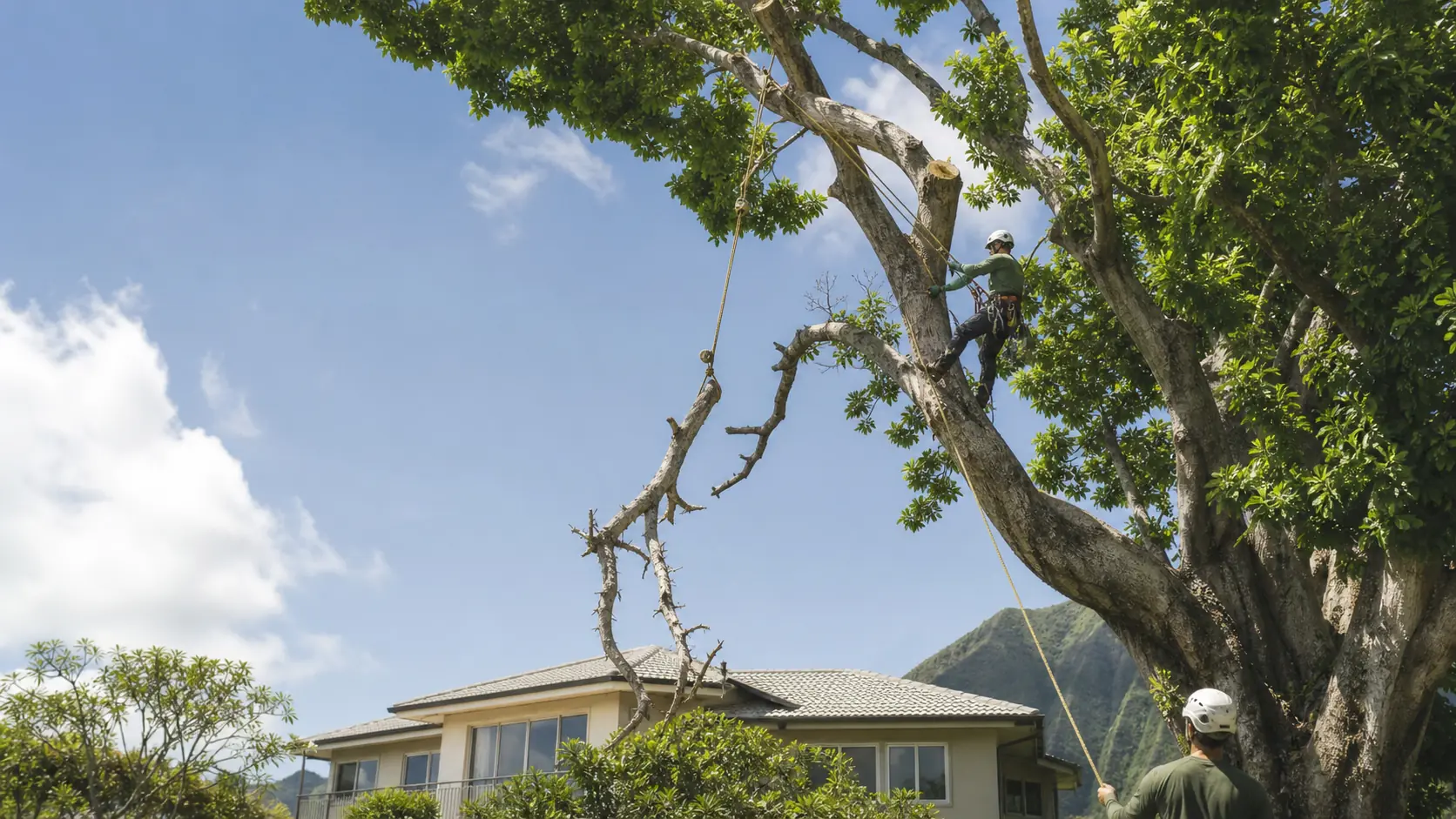
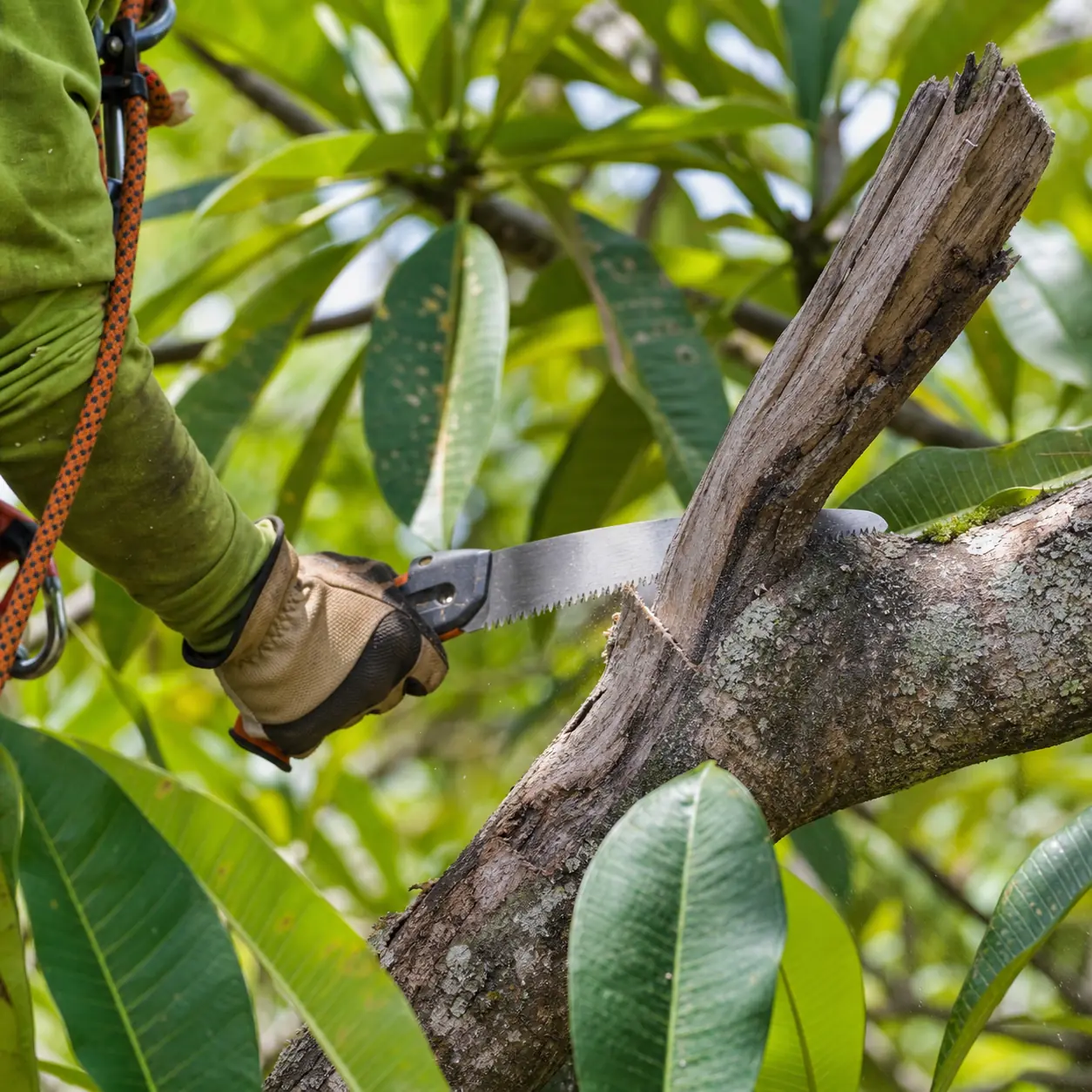
Arborist removing dead branches from a tree in Honolulu

Act now when…

  • Visible dead branches are present in the upper canopy
  • Dead wood is overhanging a roof, vehicle, or high-traffic area
  • A branch has partially broken but is still attached (a 'widow maker')
  • A recent storm left hanging or cracked branches in the crown
  • You haven't had deadwooding done in over 2 years

It can wait when…

  • The tree is healthy with no visible dead material
  • The canopy was inspected and cleared within the last 18 months
  • Dead material is limited to small twigs with no fall hazard
  • The tree is in a low-traffic area away from structures

Not sure which applies? Call us — free assessment, no obligation.

THE PROCESS

See How Deadwooding Actually Works in Honolulu, HI

Deadwooding is the targeted removal of dead, dying, and diseased branches from the canopy — not a general shaping job. Here is what every deadwooding job looks like from start to finish.

01

Free assessment — arborist identifies every dead branch worth removing

A Certified Arborist walks the canopy systematically — not just what is visible from the ground. On Oahu species like monkeypod and banyan, dead wood can be hidden deep in the canopy or disguised by persistent leaf attachment. You get a written scope of work and a written price before we schedule anything.

02

Targeted removal to ANSI A300 — cut at the branch collar, not flush

Every dead branch is cut just outside the branch collar — the ring of tissue that holds the potential for wound closure. Flush cuts on a dead limb destroy the collar permanently and leave a wound the tree cannot seal, opening a decay path into the heartwood. We make the right cut every time. For high branches our climbers work in saddle or from an aerial lift, depending on site access.

03

Full cleanup — all debris leaves with us

Every removed branch, twig, and wood chip leaves with the truck. No debris pile at the curb. If you want chip material kept for garden mulch, let us know before the job starts. Haul-away is included on every Oahu deadwooding job.

04

Documentation and workmanship warranty

For HOA and commercial properties we provide before/after photos and a written job report as standard. Our workmanship warranty covers every removal — if a dead branch in the agreed scope was missed, we come back and complete it. No charge.

Dead wood in the canopy is not always a sign the tree is dying. A healthy tree sheds interior branches naturally as the canopy grows and light competition increases. What matters is whether dead branches are large enough to cause damage if they fall, and whether the dead wood is a symptom of something deeper — disease, root damage, or structural failure. We tell you which it is during the assessment.

Ready to Remove Dead Wood from Your Tree?

A Certified Arborist assesses your canopy and gives you a written scope and price. No guesswork, no surprises.

  • Free on-site estimate — no obligation
  • Written scope before any work starts
  • ISA-certified arborist on every job
  • Workmanship warranty included
Call (808) 207-0841

WHAT WE HANDLE

Deadwooding Services in Honolulu

Dead wood removal is targeted work — not a general cleanup. We assess what needs removing and why before a saw comes out.

Residential Deadwooding

Most calls come from homeowners with a monkeypod, banyan, or mango that has visible dead limbs overhanging a roof, carport, or lanai. We remove every branch in the agreed scope and leave the yard clean. Common in Kaimuki (96816), Pearl City (96782), and Hawaii Kai (96825).

HOA & Commercial Deadwooding

HOA properties across Kaneohe and Hawaii Kai need full documentation — COI, before/after photos, and written reports. We provide all of these as standard on every commercial job. Multi-tree canopies assessed and completed in a single scheduled visit.

Storm Damage Dead Branch Removal

After a storm, dead and partially attached limbs become falling hazards on a short timeline. We handle post-storm deadwooding same-day across all of Oahu. For limbs already down on a structure, see our emergency tree service.

Coconut Palm Dead Frond Removal

Dead fronds on coconut palms are a specific type of deadwooding — remove them before they detach on their own. A falling frond from a 40-foot coconut palm hits with significant force. We clear dead fronds and check for Coconut Rhinoceros Beetle damage at the same time.

WHY DEAD WOOD IN THE CANOPY IS A FALLING HAZARD ON ITS OWN TIMELINE

Dead Branches Do Not Fall on a Schedule — They Fall When the Next Wind Hits

A dead branch loses its tensile strength over time as the wood fibers decay. Unlike a live branch that can flex under load, dead wood becomes brittle. Trade winds in Honolulu average 15–20 mph year-round. A dead limb that survived last year's trades may not survive the next Kona wind event. The risk window is unpredictable.

On mature monkeypod and banyan trees, dead wood can be hidden deep in the canopy and not visible from the ground. We climb into the canopy during the assessment — not just look up at it. If there is dead wood you cannot see, we will find it and give you an accurate scope before the job starts.

Do not wait for a branch to fall on something.

We are available same-day across Oahu. Free assessment — written scope and price before any work begins.

Call (808) 207-0841

INSURANCE & COST

Does Insurance Cover Deadwooding in Hawaii?

Routine deadwooding is preventive maintenance — not covered by standard homeowner's insurance. However, if a dead branch has already fallen and caused damage to a structure, your dwelling coverage typically pays for the damage repair and debris removal, not the deadwooding that would have prevented it.

The critical distinction: a dead branch that fell in a storm is a covered event. A branch you knew was dead but did not remove is a pre-existing condition — some carriers will flag this and reduce or deny the claim. For immediate post-storm branch damage, see our emergency tree service.

Deadwooding Cost in Honolulu

Cost depends on tree size, height, the density of dead wood in the canopy, and site access. A small ornamental with a few visible dead limbs is a short job. A large mature monkeypod with extensive interior deadwood requires a full climb. We give you an exact written number after a free on-site assessment — never a phone-only estimate. Most residential deadwooding jobs across Kaimuki, Aiea, and Kaneohe are completed in a single visit.

Want a straight answer on cost and coverage?

Call us with your details. We give you an exact written price and can tell you whether your situation has any coverage angle.

  • Free on-site estimate — no obligation
  • Written price before any work starts
  • Same-day availability across Oahu
  • ISA-certified arborist on every job
Call (808) 207-0841

Deadwooding — What Honolulu Homeowners Ask

What is deadwooding and why does it matter?

Deadwooding is the targeted removal of dead, dying, and diseased branches from a tree's canopy. It matters because dead branches lose structural integrity as they decay — they become falling hazards, especially under Oahu's trade wind and storm conditions. Removing them also eliminates decay entry points that can spread into healthy wood.

How do I know if my tree needs deadwooding?

Visible dead branches — no leaves, brittle bark, grey or bleached appearance — are the most obvious signs. But significant dead wood can be hidden inside a dense canopy and only visible from a climber's vantage point. If a tree has not been assessed in over two years, or if you have had any storm activity recently, a free assessment is the right starting point.

How much does deadwooding cost in Honolulu?

Cost depends on tree height, species, and the volume of dead wood to be removed. We give you an exact number after a free in-person assessment — never a phone-only estimate. Most residential jobs are completed in a single visit.

Is deadwooding the same as tree trimming?

No. Trimming is about managing size and shape — keeping branches clear of structures and controlling canopy spread. Deadwooding is specifically about removing dead, dying, and diseased branches. A tree can need deadwooding without needing any size reduction at all. Both follow ANSI A300 standards but serve different objectives.

Will deadwooding hurt my tree?

No — removing dead wood is beneficial. Dead branches are already a liability and a potential decay pathway into healthy wood. Correct deadwooding cuts (just outside the branch collar, never flush) give the tree's wound-closure tissue the best chance to seal the cut site and prevent further decay entry.

Call Now — (808) 207-0841